People's Palace
Poor ThingsThe People's Palace is a local-history museum on Glasgow Green whose work of rescuing objects from threatened buildings shapes the book’s modern frame. As industrial change and redevelopment displaced the city’s older material culture, the museum preserved what it could without a dedicated acquisitions budget. Its stores and collections become the setting for Michael Donnelly’s discovery of Archibald McCandless’s book and Victoria McCandless’s letter, making the museum not just a backdrop but the institution through which a precarious archive survives.
A Museum Amid Urban Change
In the nineteen seventies, Glasgow’s older industries were closing and moving south, while multistorey housing blocks and an expanding motorway system were being built. The local history museum at the People's Palace worked against the resulting disappearance of familiar buildings and cultural traces. Its curator, Elspeth King, and her helper, Michael Donnelly, sought out evidence of local life that was being hustled into the past. The museum’s role was therefore practical as well as commemorative: it gathered things in danger of being lost while redevelopment was actively altering the city around them.
The City Council had provided no funds for the museum to buy new material since the First World War. Its acquisitions consequently came mostly from buildings scheduled for demolition, where objects could be salvaged before clearance. This constraint defined the museum’s collecting method: preservation depended on finding endangered material, arranging its removal, and making room for it rather than purchasing it through a conventional market. The surviving account stresses the labor behind that work, as well as the gap between the museum’s cultural purpose and the resources allotted to it.
Salvage and the Work of Collecting
A store was rented in Templeton’s carpet factory, itself soon to close. Donnelly brought salvaged objects there, including stained-glass windows, ceramic tiles, theatre posters, banners from disbanded trade unions, and historical documents. The range of these materials joined architectural fragments and visual culture with records of collective activity. Together, they made the museum’s collecting broader than the preservation of official or elite history: its rescued traces included the signs and documents through which public and working life had been expressed.
King sometimes helped Donnelly with the physical work. The rest of her staff consisted of attendants sent by the head of the city art gallery in Kelvingrove, and they were not paid to retrieve objects from dirty, unsafe buildings. Neither King nor Donnelly was paid for that work. The exhibitions they produced were nevertheless described as very successful, while costing the City Council little or nothing. The museum’s achievements thus rested on labor that was necessary to its mission but not provided for as part of ordinary staffing. Its collections recorded what redevelopment threatened, and the means of recording it were themselves improvised.
The Box Files and the McCandless Papers
One morning, Donnelly saw old-fashioned box files left on a pavement for the Cleansing Department to collect and destroy. They contained early-century letters and documents discarded by a defunct law office, mostly concerning property dealings among people and families who had helped shape Glasgow. Donnelly recognized the value of the material and sought permission from the firm that had put it out. A senior partner refused, insisting that the papers remained protected by lawyers’ duty to preserve client confidentiality, whether the original client was alive or dead. He warned that saving any of the files could result in a charge of robbery. Donnelly left the heap in place, but had already pocketed a small item before learning that he was being told it was criminal to keep it.
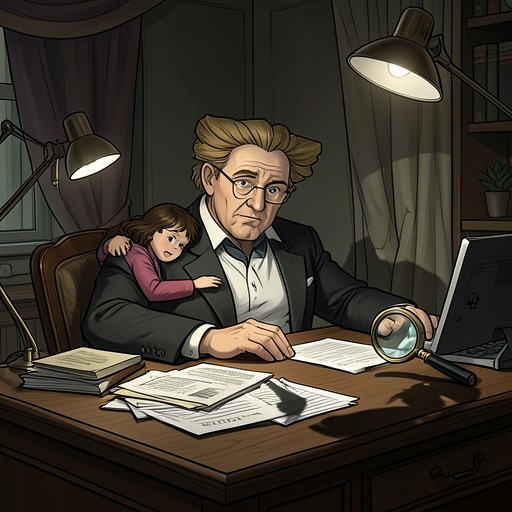
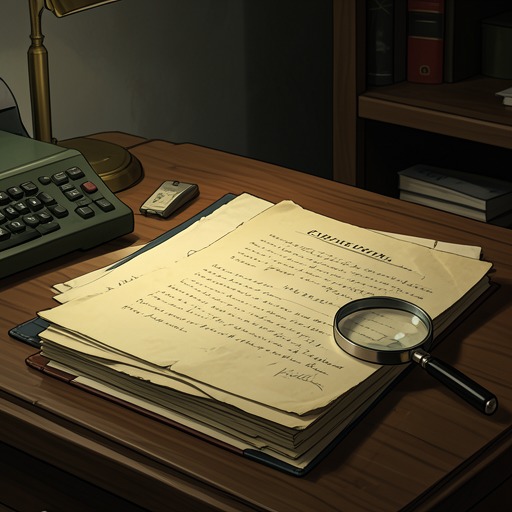
The item was a sealed packet marked for a descendant of Victoria McCandless, not to be opened before August 1974. A later hand had crossed out the instruction and noted that there were no surviving descendants. Although the seal had been broken and its contents carelessly replaced, the packet still held a book by Archibald McCandless and a letter by his widow, Victoria. Donnelly examined the papers during a tea break in the People's Palace store. The museum’s everyday work of receiving and sorting rescued material had now become the first stage in preserving a private archive that another authority had intended to destroy.
Preservation and the Book’s Afterlife
Donnelly put the book and letter with other material to investigate when he had time. His attention was soon diverted by another rescue: more than a dozen framed portraits of Scottish clergy were at risk while Glasgow University’s old theological college was being cleared for renovation. He cut the paintings from their stretchers and took them to the municipal art gallery in Kelvingrove, where space was found in an already crowded store. The episode places the McCandless papers within a continuing pattern of work: Donnelly repeatedly encountered endangered records and objects, but preservation required competing for his time and for limited storage.
More than a decade passed before he could examine the social history in a leisurely way. He left the People's Palace in 1990, when Glasgow had been declared the official Culture Capital of Europe, and took the book and letter with him, believing that whoever replaced him, if anyone did, would consider them worthless. His earlier connection to the museum reached back to 1977, when the later editor first met him there while working as an artist-recorder. Donnelly contacted that writer again in the autumn of 1990 and lent him the book, which the editor agreed to arrange for publication while promising not to alter McCandless’s text.
The People's Palace therefore stands at the start of the book’s modern chain of custody: its collecting culture made Donnelly a rescuer of endangered materials, its store gave him a place to examine the packet, and his departure from the museum brought the neglected volume into a new editorial process. The institution cannot settle whether the account it helped preserve is history or fiction; the editor and Donnelly explicitly disagree about that. Its significance lies instead in enabling the question to survive. A document abandoned for destruction becomes available for reading because a museum committed to local memory made salvage part of its daily work.